

Table of Contents
Agrivoltaics worldwide: market momentum, research and policy
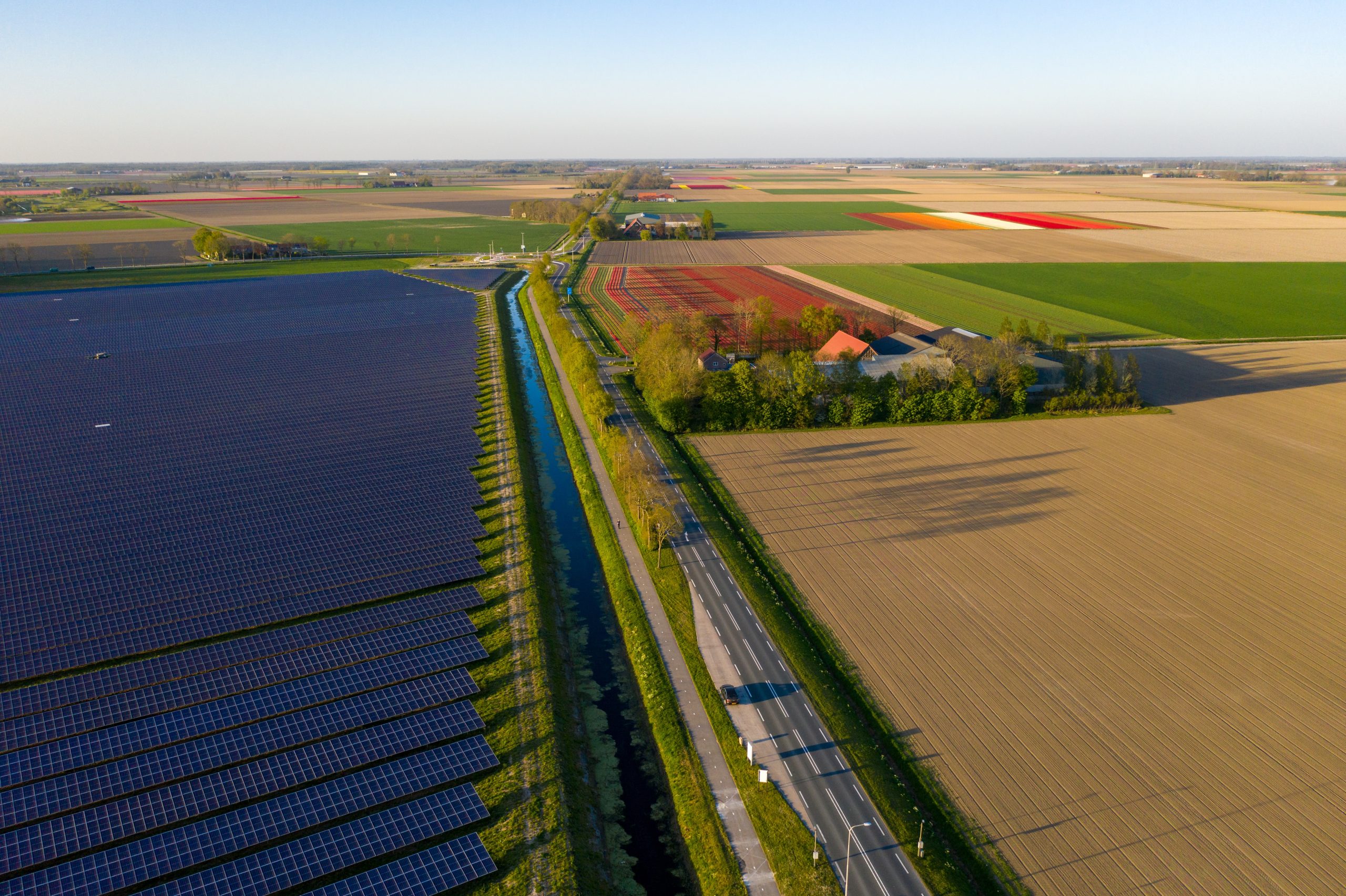
Globally, agrivoltaics – also known as dual-use solar – is moving from pilots to scaled deployment, supported by public policies, research, and investment. In the United States, federal resources now explicitly support solar–agriculture co-location, and NREL tracking shows hundreds of sites totaling roughly 5 GWdc across the country[1][2]. In Europe, momentum is strong: In 2023, the European Commission approved a €1.7 billion scheme in Italy to deploy 1.04 GW of agrivoltaics, and France enacted a 2024 decree establishing a national framework for agrivoltaic development [3] [4]. Germany’s latest analyses indicate agri-PV’s technical potential could far exceed national solar targets, underlining its land-efficient role in decarbonization [5]. Beyond these markets, Japan – an early mover since 2004 – had 1,992 registered agrivoltaic farms by 2019, while India is advancing micro-agrivoltaics and scaling farm-solar through the PM-KUSUM program [6] [7]. For professionals, curated hubs provide best practices, case studies, and live project maps to accelerate high-quality deployment[8].
Agrivoltaics: clean energy and farming can grow together
When we talk about agrivoltaics, we mean the integrated use of solar panels and crops within the same farmland. It is not simply the coexistence of agriculture and power generation, but rather an approach designed to maximize land use by intelligently combining food and energy production.
Depending on the crops and the local context, different configurations can be applied today: elevated pergola-style panels, vertical systems installed between rows, or lateral solutions providing both shade and protection.
The goal is threefold:
- generate clean energy directly in the field, reducing fossil fuel dependency and energy costs;
- maintain—or even improve—agricultural productivity thanks to the partial protection panels provide against extreme temperatures, drought or severe weather events;
- diversify farm income with revenues from feeding electricity into the national grid.
Why drip irrigation is the ideal partner for agrivoltaics
In such a fragile context, water management has become one of the greatest challenges for modern agriculture. Academic research on agrivoltaics already explores the potential to recover and redirect rainwater collected by solar panels to irrigation. Yet, beyond the ability to store some of that water, it is the irrigation method that truly makes the difference.
Peer-reviewed studies show that agrivoltaic layouts can moderate field microclimates – lowering canopy temperature, reducing evapotranspiration and improving soil moisture – especially in hot, arid regions [9]
[10] [11]. These effects often translate into lower crop water requirements and more stable plant water status, provided the layout and crop choice are well matched to the local context [12].
Against this backdrop, precision irrigation – particularly drip and SDI – aligns well with agrivoltaics because it targets water and nutrients precisely where needed while avoiding panel wetting[13] [14].
Here, precision irrigation – especially drip irrigation, including subsurface drip irrigation (SDI), combined with automation systems – emerges as the technology best suited to address climate change while boosting crop yields.
Water is delivered exactly where it is needed and in the right amount, minimizing waste. This generates water savings of up to 50% compared with traditional methods, along with more efficient fertilizer management, reduced water stress for plants, and more consistent crop quality (read more: https://www.mdpi.com/2073-4441/16/15/2206).
Another advantage: drip irrigation does not spray water onto the solar panels, unlike sprinkler systems. This prevents the buildup of limescale and bicarbonates (especially common with well water), which can reduce photovoltaic efficiency over time.
By integrating Irritec irrigation systems with on-site solar generation, pumps, sensors, valves, weather stations and controllers can all run on solar power. The entire setup becomes energy self-sufficient and low impact, cutting operating costs while contributing to the ecological transition of agriculture.
Best-suited crops and effective configurations
Not all crops respond the same way to shading or reduced direct sunlight. Leafy vegetables such as lettuce, chard and cabbage benefit from the light shading of solar panels, which reduces heat stress during the hottest months. Aromatic and medicinal plants – including basil, rosemary and sage – also adapt well, maintaining high quality even with less direct solar radiation.
For perennial crops such as vineyards and olive groves, vertical or elevated structures allow agrivoltaic installations without disrupting mechanized operations. In other contexts – such as irrigated cereals or grain-legume rotations – research is focusing on subsurface irrigation combined with bifacial side panels, which reduce evaporation and capture reflected light from the soil.
Field evidence indicates that agrivoltaic shading can reduce evapotranspiration and increase soil moisture compared with open-field controls, though yield outcomes vary by crop and layout.
Recent studies have shown that moderate shading – typical of systems with bifacial or lateral panels – can cut evapotranspiration by 20-40% while improving soil moisture.
Another promising solution is the installation of solar panels on greenhouses. These so-called “solar greenhouses” offer multiple advantages:
- panels can be mounted on existing greenhouse structures, directly above the crops;
- they usually do not require special permits;
- they eliminate the need for summer coatings or shading nets to reduce excessive light and protect crops;
- they make the entire greenhouse system energy self-sufficient.


Integrated design: drip irrigation meets agrivoltaics
Designing a drip irrigation system always begins with an agronomic and morphological assessment of the soil and crops. Other factors to consider include the water source (farm well, reservoir, irrigation network or rainwater collection), the type of crop, soil texture, topography and cultivated area.
These elements determine the correct system sizing and the most suitable solutions: filtration units, main pipelines, type of dripline and drippers (flow rate, spacing, operating pressure).
Automation components are also integrated at this stage: control units, solenoid valves, soil moisture sensors and weather stations, enabling irrigation scheduling based on real-time field data. It is precisely at this level that irrigation design and agrivoltaics design combine, panel layout, shading and machinery access must align with the placement of driplines, distribution lines and control devices.
The result of this integration is maximized efficiency in terms of agronomy, water and energy: for example, powering irrigation systems with solar energy produced on-site, or using panel surfaces to collect and channel rainwater.
In short, the synergy between irrigation and agrivoltaics is not only possible but strategic and essential.
For more information or support in designing irrigation systems – potentially as part of an agrisolar investment – Irritec’s technicians and consultants are available to help.
Sources:
[1] U.S. Department of Energy — “Agrivoltaics: Solar and Agriculture Co-Location.” The Department of Energy’s Energy.gov
[2] NREL — Agrivoltaics: Solar Farming for a Greener Future (includes totals and link to the continuously updated InSPIRE Agrivoltaics Map). Also see the InSPIRE interactive map. NREL Documenti
[3] European Commission — Press release: “Commission approves €1.7 billion Italian State aid scheme under the RRF to support agrivoltaic installations” (1.04 GW). European Commission
[4] France — Décret n° 2024-318 du 8 avril 2024 relatif au développement de l’agrivoltaïsme (and implementing arrêté). Légifrance
[5] Germany — Fraunhofer ISE analysis on agri-PV potential (news coverage and institute page). Clean Energy Wire+2PV Tech
[6] Japan — Tajima et al., “Evolution of Agrivoltaic Farms in Japan” (AIP Conference Proceedings): 1,992 farms registered with MAFF as of March 2019. AIP Publishing
[7] India — IISD: “Micro-Agrivoltaics: Hiding in Plain Sight” (context on small-scale adoption) and MNRE’s official PM-KUSUM pages/guidelines. Istituto Internazionale per lo Sviluppo Sostenibile+2mnre.gov.in
[8] AgriSolar Clearinghouse — Resource hub for best practices, case studies, and assistance. agrisolarclearinghouse.org
[9] Adeh, E.H. et al. (2018). Remarkable agrivoltaic influence on soil moisture, micrometeorology and water-use efficiency. PLOS ONE. (microclimate, soil moisture, ET under PV) PMC
[10] Shepard, L.A. et al. (2022). Agrivoltaics: modeling the relative importance of longwave radiation. PLOS ONE. (mechanisms behind reduced irrigation demand; energy pathways) PMC
[11] Barron-Gafford, G.A. et al. (2019). Agrivoltaics provide mutual benefits across the food–energy–water nexus in drylands. Nature Sustainability (author-accepted PDF). (reduced plant water stress; equal/greater assimilation and yield) agrisolarclearinghouse.org
[12] Weselek, A. et al. (2021). Agrophotovoltaic system impacts on microclimate and yield of different crops. Agronomy for Sustainable Development. (yield responses vary by crop/layout; design matters) SpringerLink
[13] Ayars, J.E. et al. (2015). Subsurface drip irrigation in California—here to stay? Agricultural Water Management. (SDI performance, management). ScienceDirect
[14] WKREC (Kansas State University). Subsurface drip irrigation—past, present and future. (technical overview; precision, water-quality contexts; solar pumping compatibility) wkrec.org
[15] Ayars, J.E. et al. (1999). Subsurface drip irrigation of row crops: a review of 15 years of research. Agricultural Water Management (USDA-ARS PDF). (yield ≥ other methods; WUE gains). ars.usda.gov